
Crypto Casino Security Risks: The Complete Player’s Guide
Crypto casino security risks are real, layered, and routinely misrepresented by platforms that use “blockchain” as a blanket safety claim. The chain is robust. The casino built on top of it often is not. Understanding exactly where the threats sit — and how to evaluate which platforms take them seriously — is the practical edge […]
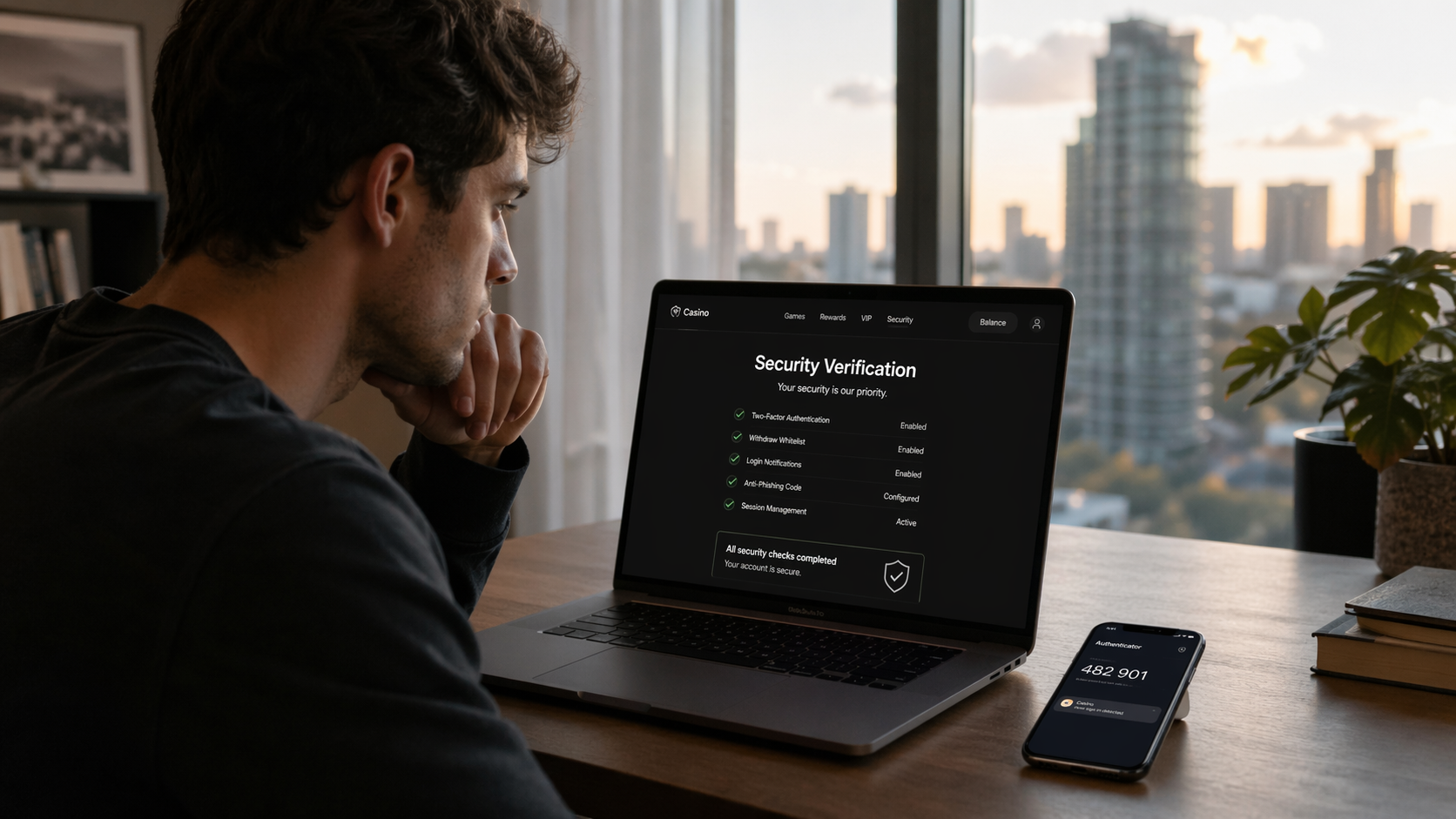
Crypto casino security risks are real, layered, and routinely misrepresented by platforms that use “blockchain” as a blanket safety claim. The chain is robust. The casino built on top of it often is not. Understanding exactly where the threats sit — and how to evaluate which platforms take them seriously — is the practical edge every crypto gambler needs before depositing a single coin. This guide covers every major threat category, what responsible operators do to manage these risks, and how to assess any platform yourself.
What crypto casino security actually means
Most players conflate blockchain security with platform security. These are entirely different problems. The blockchain itself records transactions permanently and cannot be altered retroactively — that part is structurally sound. However, the casino built on top of it is standard software: servers, smart contracts, APIs, login systems, game logic, and human staff. Each of those layers carries its own vulnerabilities. When a crypto casino is breached, the attack almost never breaks the chain. It exploits the platform.
Furthermore, the distinction between chain security and platform security is not academic. It directly determines where your money is at risk and what you can do to protect it. Understanding which layer a specific threat targets tells you whether the solution is choosing a better platform, using better personal security habits, or both.
Common attack surfaces at crypto casinos
- Smart contract logic flaws in on-chain game mechanics that allow attackers to drain funds without sending real tokens.
- Additionally, hot wallets storing live player funds in internet-connected addresses create a concentrated point of exposure.
- Phishing sites cloning legitimate casino interfaces harvest credentials from players who do not verify URLs carefully.
- Furthermore, malicious transaction-signing prompts drain connected wallets without any breach of the casino platform itself.
- Insider access abuse and compromised third-party affiliate infrastructure create attack vectors that no smart contract audit covers.
- As a result, a platform can pass every security audit and still expose players through vectors that audits never assess.
The biggest crypto casino security risks in 2026
The threat landscape in 2026 has matured and, in some ways, worsened. According to recent data, crypto hacks and scams stole over $2.1 billion in 2025 alone — making it the second-worst year on record for digital asset theft. April 2026 recorded more than $606 million in losses across just 18 days, driven largely by the $285 million Drift Protocol hack attributed to North Korea’s Lazarus Group. These are DeFi infrastructure attacks rather than casino-specific incidents. However, they illustrate the operating environment that crypto gambling platforms exist within.
At the casino level, the risk profile breaks into two categories: platform-side vulnerabilities and user-side exposure. Smart contract exploits remain technically damaging on the platform side. Historically, cases like the EOSBet losses demonstrated how predictable randomness and transfer function logic flaws allowed attackers to drain funds without sending real tokens. That category of bug has declined sharply in 2026, with smart contract exploit losses down roughly 89% year-over-year in Q1 — largely because audit standards have improved. Consequently, hackers have adapted. Social engineering and phishing attacks now account for a larger and growing share of losses, precisely because they are harder to audit away.
Transaction-signing attacks: the dominant threat in 2026
On the user side, transaction-signing attacks are the dominant crypto casino security risk in 2026. Attackers trick players into approving wallet transactions that look like standard deposits but actually authorise full wallet drainage. The exploit requires no technical breach of the platform itself. A convincing phishing site, a compromised browser extension, or a malicious approval request is enough.

Because crypto transactions are irreversible, a player who signs the wrong thing has no recourse. The funds are gone permanently, with no chargeback mechanism and no dispute path outside the platform’s own processes. This irreversibility is the most important property of blockchain payments to understand before gambling with crypto. For a full breakdown of how to identify dishonest platforms before depositing, the rigged crypto casino guide covers every warning sign worth checking. For broader platform-level warning signs, the crypto casino red flags guide covers the full checklist.
Smart contract risks and how audits work
A reputable audit from a named firm such as CertiK, Halborn, or Trail of Bits involves manual code review, static analysis, and formal verification of game logic. Auditors identify reentrancy vulnerabilities, integer overflow risks, access control gaps, and randomness manipulation. A clean, verifiable audit report significantly reduces risk from the smart contract layer. That said, audits are point-in-time assessments — code updated or deployed after the audit is unreviewed. As a result, a platform with an outdated audit is not meaningfully safer than one with no audit at all.
Platforms that display audit badges from unverifiable firms use security theatre rather than actual security. Always check the auditing firm’s own website to confirm the report exists and matches the platform’s claimed version. Moreover, even a clean audit from a reputable firm does not cover backend infrastructure, wallet management practices, or staff access controls — all of which have been exploited in real attacks. Treat a clean audit as a strong positive signal in the smart contract layer specifically, not as a guarantee of overall platform safety.
Hot wallets versus cold storage at crypto casinos
How a casino manages its cryptocurrency reserves is one of the most meaningful security signals available to players. Hot wallets — cryptocurrency stored in internet-connected addresses — are necessary for processing withdrawals but create a concentrated attack target. Historically, hot wallet breaches have produced some of the largest losses in crypto exchange and casino history.
What responsible wallet management looks like
Responsible operators limit hot wallet exposure by keeping only the funds needed for immediate withdrawal processing in internet-connected addresses. Furthermore, they store the majority of reserves in cold storage — offline wallets that require physical access and multi-signature authorisation to move. A platform that discloses its cold storage ratio and wallet management practices is demonstrating a level of transparency that unlicensed platforms rarely match. By contrast, platforms that provide no information about wallet management should be treated with caution regardless of their other security claims.
The role of licensing in crypto casino security risks
Licensing matters for a different reason than auditing: accountability. A licensed operator, even under Curacao’s framework, has a registered legal entity, a dispute escalation path, and reputational consequences for misconduct. Anonymous, unlicensed platforms have none of these. Furthermore, current AML and KYC compliance pressure on crypto casinos has increased materially, and licensed platforms are being held to higher transaction monitoring and identity verification standards than they were two years ago.

For players, licensing means slightly more friction at withdrawal but meaningfully more protection against exit scams and operator fraud. A licensed operator that withholds funds can be reported to a regulator with the power to investigate. An unlicensed operator that withholds funds faces no external accountability mechanism whatsoever.
A full breakdown of crypto casino licences can help players understand how different jurisdictions handle oversight, complaints, and protection standards. The KYC verification guide adds context on when identity checks usually apply and how the process works. Players comparing both sides can also use the licensed vs unlicensed crypto casinos guide to understand the main trade-offs in detail.
How to evaluate crypto casino security yourself
What to check before depositing
Before depositing at any crypto casino, run through this security checklist. First, verify the licence by clicking the badge and checking the operator’s name against the regulator’s live public database. Second, confirm a named auditing firm has published a report on the platform’s smart contracts and verify it on the auditor’s own website. Third, check whether the platform supports MFA and enable it immediately after registration. Fourth, confirm the platform has a visible support channel and a documented dispute escalation path.
Additionally, test the platform with a small deposit and immediate withdrawal before committing significant funds. A platform that processes a small withdrawal cleanly and quickly is demonstrating real operational behaviour rather than marketing claims. Moreover, check community forums and independent review platforms for withdrawal complaints. Problems surface quickly in active gambling communities when a platform starts failing players. The crypto casino red flags guide covers each of these verification steps in detail.
Protecting yourself at the wallet level
Platform security is only half the picture. User-side protection is equally important — and entirely within your control. Never connect a primary wallet containing significant funds to a casino platform. Instead, use a dedicated gambling wallet funded only with what you intend to deposit. Furthermore, revoke token approvals after each session using a tool like Revoke.cash. Malicious approvals persist until revoked — a wallet connected to a compromised site months ago may still be exposed if you have not cleared its permissions.
Always verify URLs manually before connecting a wallet or entering credentials. Bookmark the casinos you use rather than navigating through search results or social media links, both of which can surface phishing clones. Additionally, use a hardware wallet for any cryptocurrency holdings beyond your active gambling balance. The additional friction of hardware wallet signing is a small price compared to the irreversible loss that follows a compromised software wallet.

Crypto casino security risks: evaluation table
| Factor | Strong signal | Weak signal |
|---|---|---|
| Smart contract audits | Named firm, verifiable public report | Logo only, no verifiable source |
| Wallet management | Cold storage and multi-sig for reserves | Hot wallet only, no segregation detail |
| Licensing | Curacao, MGA, Isle of Man | No licence or unverifiable claim |
| RNG verification | Provably fair, on-chain seed verification | Third-party certified only, no player check |
| Authentication | MFA and adaptive session controls | Password only, no 2FA option |
| Withdrawal controls | Time-locked large transfers, anomaly flags | Instant large withdrawals, zero friction |
| AML and KYC | Tiered identity checks, transaction monitoring | No KYC at any threshold |
| Dispute mechanism | Licensed support with escalation path | Anonymous operator, no contact route |
Pros and trade-offs of crypto casino security
What crypto gambling infrastructure does well
- Blockchain records are permanent, public, and independently auditable by anyone — a transparency layer traditional casinos cannot match.
- Additionally, provably fair mechanics let players verify game outcomes without trusting the operator at all. The best provably fair casinos guide covers which platforms implement this correctly.
- Crypto payments reduce identity theft risk tied to card or banking data exposure at the payment processor level.
- Furthermore, smart contract-based payouts at non-custodial platforms cannot be withheld by operator decision. The custodial vs non-custodial crypto casinos guide explains how this model works in practice.
- Strong platforms now apply enterprise-grade MFA, adaptive fraud detection, and transaction simulation tools that flag malicious approvals before they execute.
- As a result, a well-chosen crypto casino combined with strong personal security habits provides a meaningfully safer environment than poorly run alternatives.
Where crypto casino security risks remain real
Irreversibility cuts both ways. A hack, scam, signing mistake, or deposit into a platform that refuses to pay produces permanent loss with no chargeback and no dispute path outside the platform’s own processes. Moreover, regulatory grey zones still apply to most offshore crypto casinos — meaning player fund protection is weaker than in UK or Swedish licensed markets. DeFi saw a 68% year-over-year increase in hacking incidents in the first half of 2026 compared to the same period in 2025, confirming that hack frequency is rising even as individual exploit sizes evolve.
Finally, no combination of platform security measures protects a player who signs a malicious transaction on a phishing site. The blockchain’s neutrality is absolute — it processes valid signatures regardless of how they were obtained. According to the UK Gambling Commission, players using unlicensed operators have no formal legal recourse if a platform refuses to pay. Consequently, the combination of a licensed platform, personal wallet security, and pre-deposit verification is the strongest available protection — not any single factor alone.
Conclusion
Crypto casino security risks are manageable — but only for players who treat due diligence as non-negotiable rather than optional. The blockchain layer is strong. The platform layer is where real losses happen: through smart contract flaws, compromised hot wallets, phishing attacks, and transaction-signing traps that require no breach of the casino itself. A licensed operator with a verifiable audit, cold storage disclosures, MFA, and a real dispute path is materially safer than an unlicensed platform hiding behind blockchain marketing language. No platform is zero-risk. The difference between a well-structured operator and a poorly run one, however, is the difference between a manageable environment and an irreversible financial loss.
Frequently asked questions
Is blockchain technology enough to keep my funds safe at a crypto casino?
No. The blockchain records transactions securely, but the platform built on it relies on smart contracts, hot wallets, and login systems that carry standard software risk. Platform security and chain security are separate layers that require separate evaluation before depositing.
What should I check before depositing at a crypto casino?
Verify the licence against the regulator’s public database, confirm a named auditing firm has published a verifiable smart contract report, enable MFA immediately after registration, and test with a small withdrawal before committing significant funds. The crypto casino red flags guide covers each of these checks step by step.
Can I recover funds if a crypto casino is hacked or scams me?
In most cases, no. Cryptocurrency transactions are irreversible by design. If funds leave your wallet through a hack, phishing attack, or malicious approval, there is no chargeback mechanism. Licensed platforms may offer internal dispute resolution, but recovery is not guaranteed and is rarely fast.
What is the biggest crypto casino security threat right now?
In 2026, social engineering and phishing attacks have overtaken smart contract exploits as the primary cause of losses. Attackers trick players into signing malicious transactions or entering credentials on cloned sites. No audit protects against this — player awareness and wallet hygiene are the only reliable defences.
Does a smart contract audit mean a platform is safe?
An audit from a reputable firm significantly reduces risk in the reviewed code. It does not cover updates deployed after the audit, backend infrastructure, or wallet management practices. Treat a clean audit as a strong positive signal for the smart contract layer specifically — not as a guarantee of overall platform safety.
How do I protect my wallet when gambling with crypto?
Use a dedicated gambling wallet funded only with what you intend to deposit. Never connect a primary wallet containing significant holdings to any casino platform. Revoke token approvals after each session, bookmark casino URLs rather than using search results, and verify URLs manually before connecting a wallet.
Table of Contents
More Guides Worth Reading

Learn Before You Play: Casino Guides
Crypto gambling has a learning curve. Our guides explain the terms, tools, and mechanics that matter most, from wagering requirements to wallet setup, so you can avoid costly mistakes and play with greater confidence.